Friday, January 31, 2020

Maps, Routes and Mathematics

What is a Map? And when did you use a route map lastly? oh, and what does math has to do with maps? Well, lets see.

Long long ago, actually not so long ago, before the google map and GPS we still travelled.👍
We found our way through, in unknown places and yes People discovered places...
The most important tools which we used were The Sun, Moon and the Stars and of course the Cardinal Directions (East, West, North and South). Simple right!.


Focus Points

·       Visualizing objects/space and representing them in a paper

This is a beautiful concept to develop the observational skills among children. I always use the “count and recollect the objects game” for kids. In this game a specific number of things (say 20) are displayed in a room. Kids can observe the object for 10mts and to list them down in a paper, without seeing. Well, one must be conscious about their surrounding right! Now in this concept, you do not just list them down. You draw them out!!! Excellent.

·       Orientation – Relative position of objects in space w.r.t cardinal directions

Age old traditions use nature as relative constant. The Sun, The Moon and Yes “The Pole Star”, which has been the sailors’ compass to reach shores safely (That is opportunity for an interesting narration/story). Where is the north of your classroom and how would you identify that? Once you have done that you can draw the floor map of your classroom, then your school, your community, state, country and what not! But if you do a map without marking your north, what can go wrong?

·       Idea of dimensions (representing big/small objects in picture)

Ok, I got my North right. Its time to put down things in paper. There are different things here. Like the door which is bigger than the window. The benches and chairs and things big and small. How does my eyes perceive them? How can I help other see this in a drawing? Yup get your creative skills do the task. There is no right or wrong, good or bad… just the intention to communicate through picture. Imagine you are helping a new student to navigate your class, now the challenge is you should do this only through drawings.

·       Idea of distance (and scale)

It’s a drawing right, so we put down biiiiiiiiiiiiiiig spaces (I mean length and breadth) in small paper. But be careful with which one should be long/short… have you ever thought, Why are rooms invariably rectangular spaces? (Golden Ratio)


So, Did you discover the “Still Life Artist” in you today?

The key factors to logically approach a destination in the shortest possible time (yup the math of movement) lies in positioning things relatively, with symbols for reference. When kids are taught with these two factors and use natural reference, we are teaching them a survival skill.
Key points to focus
1. Compass rose/Cardinal directions (East, West, North and South)

The figure used to represent the orientation of the cardinal directions, in a map. It can be as simple as just an arrow marking the North, or a elaborate one like this giving all the eight directions. Without a compass rose, your map will not be valid.

2. Symbols (Pictorial representation of Physical Landmarks)
3. Map Key or Legend (helps to understand the map)


(https://clipground.com/images/key-mapping-clipart-3.jpg)

Doing a class activity on map symbols will be fun. Visualisation is a very important skill to understand the language of Nature.


Food for Thought!!!
Indian topography is very ancient. The main sources of ancient Indian geographical works are the Vaidikas, the Ramayana, the Mahabharata, the work of Buddhists, Jains and the Puranas.
The rishis of Rigveda initially formulated the principle of four directions, i.e., Purva (east), Paschima (west), Uttar (north) and Dakshina (south).
By adding Zenith (Meru) and Nadir (Badavanala), it was raised to six. Afterwards eight and ten directions are frequently mentioned in the Puranic literature.


Saturday, January 11, 2020

Wondering about Squares and Cubes


G is my friend who comes home, to get help in mathematics. He is extremely passionate and crazy about cricket. He spends close to 5hrs in the ground with his district team. Well, he is in class 8. When we met for the first time, he said he is not able to follow anything in math class, so he usually shuts off. He would be glad if I can help. "My pleasure". I love one-one time specifically for learning. G doesn’t talk much. I must be very sensitive to his very subtle facial expressions to know what he feels. And most of the times he is tired after his cricket practice.


It was a sunny evening and G walked in at 6pm after his field practice. We sat down and after over a cup of fresh mint juice, started with cubes and cube roots (chapter7 NCERT). I was telling him about cubes what they are… And G gave me this very deep thoughtful look!. “why am I learning this?” he slowly asked, Is it really important to know this???????????. I was not sure how answer that question. To me numbers are always exciting, as exciting as playing cricket was for G.

There are just 4 perfect cubes from 1-100. 
1  =1x1x1
8  =2x2x2
27=3x3x3
64=4x4x4

Guess what?
cubes were in news recently with a major breakthrough. Diophantus of Alexandria, a 3rd century mathematician had posed the problem of sum of 3 cubes.

x3+y3+z3=k, with k being all the numbers from one to 100.

Looks simple?, well not really. Enjoy reading
This was in 1994
http://www.asahi-net.or.jp/~KC2H-MSM/mathland/math04/matb0100.htm 

Note the "???" for some numbers 

In March 2019 Andrew Booker solved the sum of 3 cubes for 33In September 2019 Professors Andrew Booker and Andrew Sutherland found the solution for 42 by using Charity Engine
https://phys.org/news/2019-09-sum-cubes-solvedusing-real-life.html

Watch them in action!!!
for 42
for 33
for 74

Friday, January 10, 2020

Area and the space within....

Yesterday my daughter came up with the classic doubt, "I don't understand what Area is?"... can you help?

Well to begin with a story, 
That was the time of river valley civilisations. Man started growing his own food by the banks of rivers as it was convenient source of water for your plants. Now, the ‘societies’ or ‘living in groups’ was just beginning and each one chose a place for themselves. Eventually, the question of "which pace belongs to whom?" cropped up. Now to measure a piece of land, it is not enough if you just measured the length! oh there are two sides... 
Ok then you measure the length and breath. Is that enough? No... the land belonging to a person is a closed space you see, with 4 sides. All this while people had to measure only length or breath. (We say one dimension). Now they must measure a closed space, which has both length and breath. So, you need a "New Unit", of measurement (two dimension). That's how they came up with the concept of "Area of a Space".


Now imagine, this is a piece of land belonging to you.
How do you create a unit of measurement, with what you already know? Let’s try. 
The smallest unit for measuring length which you use is 1cm? Ok. Now consider a closed space with all 4 sides=1cm. What shape will it form? It will be a square. Let’s call this 'a unit square with area 1square cm'. 
 
 Area 1 cm= 100 mm2

Like your 1cm which is smallest unit for measuring length, this 1sq cm is the smallest unit for measuring area. (No, you don’t have a physical object like your ruler/scale for this). Area of your piece of land will now be equal to the number of unit squares it occupies…


which is 3sq cm in this case. You say the area of your piece of land is 3sq cm. (pictures not to scale)

The unit can be cm, m or any unit you choose; accordingly, the area will be in sq cm, sq m etc.

We have learnt another measurement today and this is for 2d spaces. The unit of Area is sq. units 
Let us list the measurements we know - 
One Dimension Measures: Length, breath, height
Two Dimension Measures: Area, Perimeter, circumference (for circle)
Inclined Measures: Angle

Revising Metric units of length:
10 mm = 1 cm
10 cm = 1 dm (decimeter)
10 dm = 1m 
(100 cm = 1 m)
1000 m = 1 km

That's about it!!!

Thursday, November 28, 2019

Decimal, Decimal, Where is your Place?


Isn’t it so easy to relate to something, based on previous knowledge? It is. Children also find it easier to develop on concepts based on previous known facts. So, why is that place value of decimals taken too easily. (Just ask your kid if they knew where decimals come in a place value chart. If they knew, awesome!. If not sit with them NOW!)

Place Value of Decimals

Decimal is a  fraction whose denominator is a power of ten and whose numerator is expressed by figures placed to the right of a decimal point. e.g. 2.5 = 2 5/10

In a place value chart, to the left of 'ones' are Integers .
Tens is ten times one (1x10)
Hundreds is hundred times one (1x100) or ten times ten (10x10)
Thousands is thousand times one (1x1000) or ten times hundred (100x10) etc.

Similarly, to the right of 'ones' are Decimals.
Tenth is one part of tens (1/10) or 0.1
Hundredth is one part of hundred (1/100) or 0.01
Thousandth is one part of thousand (1/1000) or 0.001

(Its easy to note that decimals can also be written as fractions)


(Source: https://www.math-only-math.com/images/decimal-place-value-chart.jpg)

Let the kids do this place value chart and locate decimals.Then it becomes very easy to move ahead. Skipping or rushing through the place value of decimals, creates ambiguity and confusion for the little one.

How to demonstrate?
1. Through currency notes and coins (sad, we don't have 10p coins anymore). This gives an opportunity for the kids to understand increase and decrease in value.
2. Units of measurements. 1cm being broken into 10mm and increased to 1m.

Tuesday, May 28, 2019

The AD & BC of Classroom Management and Creative Learning

Education is the responsibility of Every Individual - My Belief

 THE AD & BC OF CLASSROOM MANAGEMENT AND CREATIVE LEARNING”

Every time I sat with my daughter or discussed with other kids/parents, there were a few things which I believed could be done better. The list only kept growing everyday. To address this and to take my views to the school and teachers, I created the workshop content, ‘The AD&BC of Classroom Management and Creative Learning’. This is culmination of my ideas/desire of a better classroom experience, for both children and teachers. I intend to do this as a personal service, my bit for the education and future generations.
My aim of the workshop is to provide a framework, based on values and self-discipline. The teacher may then create her own    ways by expanding or modifying the frame work.

Framework for the Workshop
A: “Me - The Teacher” Your Core Values define you!
D: Discipline is Character Building
B: A World of class & Class in the world, Social Justice and Culture Based Learning are the need of the hour
C: The Learning Process & The Creative Individual. Learning and Improving should be the Goal.

(You can mail me at creative@gmail.com to get a workshop done in your school.)

 25/05/19 conducted for Teachers of All Saint Diocesan School, Tezpur.
12/07/19 conducted for Teachers of St. Lopon English School, Dirang. 

Friday, March 15, 2019

INVOLVING WITH KIDS AT HOME - PART 5 (Saying it with poems)

How do you make a ten year old look at what she/he is doing every day? Step out and look at themselves, so that they can analyse and understand !!!!!!

We did it with poems and believe me, it wAs so much fun.... and yes, it was a relief to know that you are not alone in this world..... ( courtesy https://www.poetry4kids.com/reading-level/grade-four/)

Mr. Nobody
BY ANONYMOUS
I know a funny little man, 
    As quiet as a mouse, 
Who does the mischief that is done 
    In everybody’s house! 
There’s no one ever sees his face, 
    And yet we all agree 
That every plate we break was cracked 
    By Mr. Nobody. 

’Tis he who always tears out books, 
    Who leaves the door ajar, 
He pulls the buttons from our shirts, 
    And scatters pins afar; 
That squeaking door will always squeak, 
    For prithee, don’t you see, 
We leave the oiling to be done 
    By Mr. Nobody. 

He puts damp wood upon the fire
   That kettles cannot boil;
His are the feet that bring in mud,
   And all the carpets soil.
The papers always are mislaid;
   Who had them last, but he?
  

Belinda’s an Expert at Bathing
Belinda’s an expert at bathing.
She loves to swim laps in the tub.
She’s clever at cleaning her kneecaps
and giving her elbows a scrub.
She often makes beards out of bubbles,
then puts on a play with her toys.
She practices splashing and shouting
and filling the bathroom with noise.
She’s mastered the use of the loofa,
the sponge, and the body puff too.
She’s truly a wiz with a washcloth.
She’s skillful at using shampoo.
Belinda’s so good in the bathtub,
just ask her; she’ll probably say
she’s planning to grow up to be
a professional bathlete someday.

Two poems which we could relate to, soooooooooo easily😁😁😁

Tuesday, February 19, 2019

INVOLVING WITH KIDS AT HOME - PART4 (Non Verbal Communication)

Winters mean, more indoor time my girl. And definitely no energy for a hour long conversation. So how about some non verbal communication and entertainment!!!!!!

ANIMATION, is one of my favourite medium of creative expression. “Introducing the great ISHU PATEL and his PARADISE”

We both enjoyed watching this short animation film, very engaging and absolutely brilliant. After this made Chaaru explain the concept of the movie, yup job well done :)

The Artist

https://en.m.wikipedia.org/wiki/Ishu_Patel


His Masterpiece

https://youtu.be/A5IN4Kv5Jvo

You should listen to Gheorghe Zamfir playing the pan flute/nai


9 February 2008 | Review by MartinHafer 
This is a strange and fascinating film from Ishu Patel. Instead of the normal Western-style narrative, this animated short is one long piece of art--obviously inspired by Indian paintings of birds, people and the afterlife. All this gorgeous action unfolds slowly and is accompanied by the ethereal music of Gheorghe Zamfir--an internationally known (except in the US) panpipes legend whose music I have loved for years. Combined, it's an absolutely inspiring and breathtaking piece of art.

Because it was such a lovely film, it was nominated for the Oscar for Best Animated Short Film--which it lost to CHARADE. I don't know exactly how I feel about this, as I've seen both. CHARADE is funny and very clever but a rather superficial film. PARADISE is more a work of art and less a film for the public at large. Personally, I am happy either way, as they both were delights--too bad they couldn't give the award to both!!


Wednesday, November 28, 2018

INVOLVING WITH KIDS AT HOME - PART3 (Learning tables by heart)

Ma, why should I memorise tables? I can always compute it, I know how to do that.

Well unless Iam sure as to why she should memorise tables, how can I convince her?

This is why I insist on memorising tables....
If I can commit key facts to long term memory, then my working memory if free to do more deeper and complex learning. I will be more efficient in my work. This is my logic, my reasoning and it has worked for me.

But is just rote practice and smart tricks to recall sufficient?
Define toy NO! You need reasoning with fluency in recall. A few simple activities at home can help. Another dining time discussion.

What is fluency?
Check out Susan Russel’s definition as “a well-built mathematical foundation with 3 parts”, as follows
1. The Structure - Understanding the meaning of operations and their relationship and arrangement. E.g. multiplication as repeated addition (3x10 = 10+10+10)
2. Relation - knowing facts and how they relate to each other. ( If I know this, then how do I make a connection? 4x5=20, so I can say 4x50=200)
3. Concept - the base 10 number system and how the same numbers behave in different operations
(24x10=240 but 24+10=34)

So darling, it’s not about recalling a fact from memory. It is the Real Fluency, deep understanding of concept + recall accurately and with speed.

Check this out!
If you know 2x2 is 4
Then Super Size it 2x2000 is ?
Now Skinny Size it 0.2x10 is?

Get going doll......


INVOLVING WITH KIDS AT HOME - PART2 (Analogy)

Looking for a fun family dining experience?  Try personalised Analogy!!!
7am : breakfast :: 8pm : —————
Idli : sambar :: ————- : chole
Oh we have so much fun.

So what is a analogy?
It’s a comparison between two things that show a way in which they are similar. It is more of an inference or making connection from one detail to another.
Wikipedia will give you the example of atom and solar system ( Rutherford, later modified by Niels Bohr).

Why Analogy?
It is a very useful tool to see how you make connections, between different details. Helps in problem solving, understanding concepts, convey message, make an argument, improve perception/memory/creativity/ conceptualisation/ communication and what not!

Besides linguistic, logical and numerical analogies are a definite part of any competitive exam.

Numerical Analogy....
Is basically identifying relationship, similarity or difference between a group of numbers. It can be of two types,
1. Looking for a missing number/pattern
2.  Finding relation between the numbers
Look for relations like factors, multiples, primes, square numbers, roots etc.

So get going. There are numerous Analogy downloads available online

INVOLVING WITH KIDS AT HOME - PART 1 (measurements)


Simple supporting activities at home, which go a long way to helps kids understand math concepts.

-Ma today they taught measurements of weight in school. What do you mean by 100grams? How does it look?
-Do one thing. Go to the store room and bring some packets of different items.
Now, check what is written as weight on these packets.
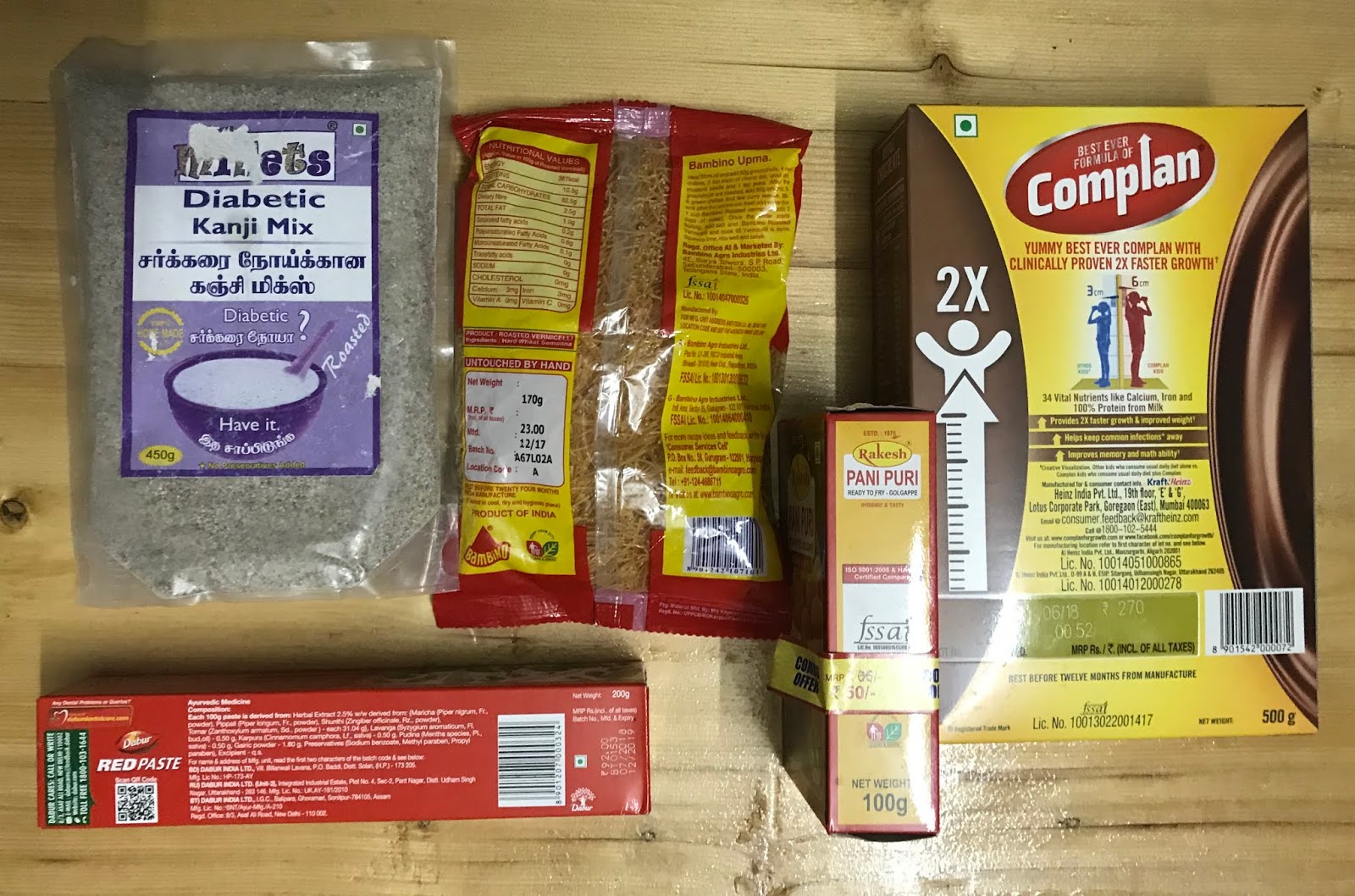
-kanji mix 450g, vermicelli 170g, toothpaste 200g, pan puri masala 100g and complan 500g. (She held them in her hands and compared the weight)
- Do you get an idea? This is how different weights feel.

A simple exercise to help the kids visualise a concept. She volunteered to do demo for liquids and did a awesome job :)

Ps - I still school at home :)

Thursday, March 30, 2017

Visualising 4 digit numbers by an 8 year old

Today was math class for 4 digit numbers. Introducing the place value and identifying 4 digit numbers was the plan.
the task was easy and Chaaru could follow based on the previous learning. Infact she picked up quite fast.

As per the design approach, we started discussing the relevance of 4 digit numbers in real life.
Where do you find 1000 to 2000 people together?
Chaaru: In India?
Me: the whole of India onlu 2000 people?
Chaaru: Coimbatore?
Me: hmmm
Chaaru: Vadavalli?
Me: Chaaru think and tell me, dont just say something.
(suddenly her eyes were swelling with tears)
Chaaru: I dont know. I cant nderstand.
Me: No problem (hugs and smiles). Lets try and understand. ok how many people will be living in our apartment...
thus begun the analysis and we computed the following:
52 houses - 4 people in a house - 52 + 52 + 52 + 52 =208 people. this is less than 1000

School where she studied:
1 class = 5 sections
1 section = 32 students
5 sections = 32 + 32 + 32 + 32 + 32 = 160 students
there are 12 classes = how many students?

""Amma should we count 160, 12 times :( "
Me: No, lets see if we can do it any other way. 12 can be written as 10 + 2 or 5 + 5 + 2

Chaaru: I can do this, (she added 160, 5 time and then 2 times)
SO 12 classes = 820 + 820 + 320 = 1960 students

In a School there are around 2000 people (and that was an achievement, you should see the happiness to believe it)

This was a very meaningful exercise where the child could visualize 4 digit number. Unless this understanding is initiated, the learning will be a mere calculation/technical mastery, without any relevance to her life.

The next step is to give different perspectives of 4 digit numbers, in terms of weight, distance, money, etc. Once the child is able to visualise the numerical context, application/operation of numbers will be more relevant.

Welcome home schooling :)

Tuesday, March 07, 2017

A Designer Math Teacher – My Approach


What is design?
Design conveys any intended message to people.
Art is a creative expression of an artist.
Unlike art, success of a design lies in, how easily it is understood by a common man. This is the reason designs are the most popular medium of communication.
A design encompasses different mediums, ideas, interactions, information, objects, books, posters, products, packaging, places, signs, systems, services, furniture, websites.

Every design involves a process, from research, conceptualizing, prototype, testing, implement and evaluate.

What is designing in math teaching?
Math is a language with its own vocabulary. We say, or we are aware of this… But never approach it that way.

Visualize the following classroom scenarios.

English class - Children we read the story of Rapunzel today.
I hope you all enjoyed it. Now let us try and understand the difficult words in this lesson.
1. Tower - a tall building from where you can see far off
2. Tangled - something which has lot of knots in it, ex. wire, rope or hair

Math class - Children we learnt two digit addition today.
So tell me what is 20 + 5? (30 the teacher corrects by adding/counting after twenty 5 more so 25) Very good. What is 12+12? (24) Excellent!.

Observe, in the English class, the focus is on understanding the vocabulary.
Where in the math class the focus is on understanding the technique.
Has any teacher asked, "children what is the meaning of the word addition?” The problem starts from here.

What we do not understand, we do not enjoy. This lack of understanding in math vocabulary keeps piling through the years of schooling. Eventually even after 12 years of education, we do not understand math.

Some of my friends (age 40+) comments on math
"Till today I do not know what a denominator means, except for it is written below the numerator"
"Guess what, tangent always went in a tangent. Could never place it in the right place"
"I always run in the opposite direction when someone takes the name of LCM and HCF, never can tell the difference..."

So is designing for math just explaining the vocabulary?
No. It is just a part

My approach to designer math learning
1. Explain the need with a bit of history. (If I do not feel the need for it, I am not going to be interested in it)
2. Conceptualize (can give perspectives, eg add is including, increasing, more than, etc)
3. Help the students visualize, it can be a story or an experience
4. Teach the technique and allow discussion on the same
5. Practice (not like 100 sums to drive you insane)
6. List the vocabulary and give meanings (this can get creative and funny)
7. Have a conclusion (mind map helps). It can also be a connection to the next concept.

All this need a truck load of creativity, patience and the luxury of time.
More successful in a 1-1 environment. (Will this improve score/marks? I do not know)

Welcome home schooling :)

Wednesday, June 01, 2016

Applications on Percentage - The Story of A T-Shirt

I am Swami and I have a retail outlet in the city. Now I am in the spinning mill to buy t-shirts on whole sale.
The wholesale price of a t-shirt is Rs.200. Now I have to decide on the retail price (MRP), which will be the cost price of the customer to buy a t-shirt. This should include my overheads like shop rent, electricity, maintenance and a profit margin.
I decide it to be 20%. So

the cost price CP = 200 + (20% OF 200)
            = 200 + (20/100 x 200)
            = 200 + 40
            = Rs.240
For any t-shirt, irrespective of the cost, I will have a margin of 20%.
So my profit on a single t-shirt will be
 SP - CP              = 240 - 200
  Profit                 = Rs.40

When I came back to my shop, I realised that there are few tshirts which were not sold from the last season (old stock). I cannot keep them and incur a loss. SO I decide to sell it for a discount of 15%.(CP being Rs.240). The Sale price of this tshirt will be
Sale Price      SP = CP - Discount
 = 240 - (15/100 x 240) 
 = 240 - 36
 = Rs.204

What will be my total profit for the day if I sold one new and one discounted t-shirt each?
Profit = CP - SP
       = (240 + 240) - (240 + 204)
       = 480 - 444
       = Rs.36
What percentage is this profit?
Profit % = Profit/CP x 100 (As both profit and loss are always calculated on the CP)
= (36/480) x 100
= 7.5%

This way I maintain a record of profit/loss on a daily basis and try to run my business, obviously for a profit.
What would you suggest should be my profit margin for (a) girls frock (b) boys denim and (c) party wear . WISH ME LUCK!!!

Tuesday, April 26, 2016

Algebra - INTRO STORY (1) - Bijaganitha

The seed counting - by Bhaskara The Teacher

Bhaskaracharya was a 12th century Mathematician, born in modern day Karnataka. He was one of the original thinkers who wrote on mathematics. A medieval inscription in an Indian temple reads:-
Triumphant is the illustrious Bhaskaracharya whose feats are revered by both the wise and the learned. A poet endowed with fame and religious merit, he is like the crest on a peacock.

Bhaskaracharya wrote the Siddhānta Śiromani (1150 AD), a treatise on mathematics when he was 36 years old. It is divided into 4 parts and can be considered as separate works. 


Imagine math written in a poetic language and named as "The Beautiful". Well, its the LilavatiThe name of the book comes from his daughter, Lilāvati. The book contains thirteen chapters, 278 verses, mainly arithmetic and measurement.
Bijaganita It is divided into six parts, contains 213 verses and is devoted to algebra. It was the first text to recognize that a positive number has two square roots (a positive and negative square root).
Ganitadhyaya and Goladhyaya are devoted to astronomy. All put together there are about 900 verses.(Ganitadhyaya has 451 and Goladhyaya has 501 verses).
Note: 12th century was a important period in the history of mathematics. It is the time when trade was flourishing with the East, and Eastern knowledge gradually began to spread to the West. Indian numerals were modified by Arab mathematicians to form the modern Hindu-Arabic numeral system (used universally in the modern world).

Thursday, April 21, 2016

Introduction to Algebra

Algebra is the Language of Mathematics

Algebra is one of the most important and interesting topics in middle school mathematics. Here children understand the use of unknowns, with practical application in their daily lives. Experience of understanding algebra at school goes a long way in the kind of liking/hatred one will develop as an adult towards mathematics. So it is very important for the teacher to first understand the concept and help students interpret the same.

There are 3 important things I should understand as a teacher when preparing to introduce algebra
1. Algebra is the generalization or abstraction of arithmetic.
2. It is clearly the pure language of mathematics, which requires knowledge of  the mathematical vocabulary (symbols and variables) and grammar (algebraic rules)
3. Algebra is a tool for mathematical modeling (solving real world problems)

The effective way to introduce algebra at middle school is by recollecting something students already know (interlinking subjects) or using an activity.

Algebra has been an inevitable part, in the growth of different civilizations. Following is a mind map of the respective contributions.

(The teacher might or might not elaborate on the different contributions. But can give it as group assignments to initiate research/ exploratory learning among the students)


(Click on the image to enlarge.)

Saturday, April 16, 2016

Suares, Cubes and their Roots - INTRO STORY (1)

Fibonacci and other number sequences

Consider this set of numbers 0, 1, 1, 2, 3, 5, 8, 13, 21, 34, 55, 89,..... how would you define this series?
If you observe carefully you can find that every number is the sum of its previous two numbers
0 + 1 = 1
1 + 1 = 2
2 + 1 =3
3 + 2 = 5 and so on. These are known as Fibonacci Numbers or the Fibonacci Sequence. This sequence is surprisingly found every where in nature like the spiral arrangement of pineapples, the seeds of a sunflower or the arrangement in a pine cone.

Who was this Fibonacci?
He was a 13th century Italian mathematician who wrote a hugely influential book called “Liber Abaci” ("Book of Calculation"), in which he promoted the use of the Hindu-Arabic numeral system, describing its many benefits for merchants and mathematicians alike over the clumsy system of Roman numerals then in use in Europe.

Before Fibonacci wrote his work, the sequence Fn had already been discussed by Indian   scholars, who had long been interested in rhythmic patterns that are formed from one-beat and two-beat notes. The number of such rhythms having n beats altogether is Fn+1; therefore both Gospala (before 1135) and Hemachandra (c. 1150) mentioned the numbers 1, 2, 3, 5, 8, 13, 21, … explicitly.

the Fibonacci or the Hemachandra numbers, there are other interesting patterns formed with numbers.

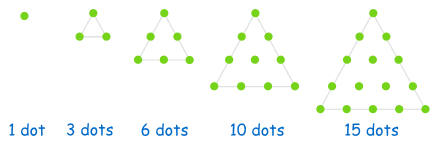
Triangular Numbers

Pattern - Add the next integer to the bottom and count the dots.

triangular numbers


Squares 

Pattern - add increasing odd numbers to get the next number or product of a number multiplied by itself.


Cubes 

Pattern - product of a number multiplied by itself 3 times.


Monday, April 11, 2016

EXPONENTS AND POWERS - INTRO STORY (2)

The Story of Googol and Googolplex

A googol is a large number equal to 10^(10^2)=10^(100) (i.e., a 1 with 100 zeros following it). 

Written out explicitly,
10000000000000000000000000000000000000000000000000000000000000000000000000000000000000000000000000000


Edward Kasner (April 2, 1878 – January 7, 1955) was a prominent American mathematician who was appointed Tutor on Mathematics in the Columbia University Mathematics Department.
In 1940, with James R. Newman, Kasner co-wrote a non-technical book surveying the field of mathematics, called Mathematics and the Imagination. It was in this book that the term "googol" was first introduced:

 If you start reading the book at the beginning, you'll come to the first chapter, titled "New Names For Old." Here is the relevant passage about the invention of the words "googol" and "googolplex":

"Words of wisdom are spoken by children at least as often as by scientists. The name 'googol' was invented by a child (Dr. Kasner's nine-year-old nephew) who was asked to think up a name for a very big number, namely, 1 with a hundred zeros after it. He was very certain this number was not infinite, and therefore equal certain that it had to have a name. At the same time he that he suggested 'googol' he gave a name for a still larger number: 'Googolplex.' A googolplex is much larger than a googol, but is still finite, as the inventor of the name was quick to point out. It was first suggested that a googolplex should be 1, followed by writing zeros until you got tired. This is a description of what would happen if one actually tried to write a googolplex, but different people get tired at different times and it would never do to have Carnera a better mathematician than Dr. Einstein, simply because he had more endurance. The googolplex then, is a specific finite number, with so many zeros after the 1 that the number of zeros is a googol. A googolplex is much bigger than a googol, much bigger even than a googol times a googol. A googol times a googol would be 1 with 200 zeros, whereas a googolplex is 1 with a googol of zeros. You will got some idea of the size of this very large but finite number from the fact that there would not be enough room to write it, if you went to the farthest star, touring all the nebulae and putting down more zeros every inch of the way."

--MATHEMATICS AND THE IMAGINATION, Kasner and Newman, page 23.

Lets us explore the concept of exponents...

Friday, April 08, 2016

EXPONENTS AND POWERS - INTRO STORY (1)

Exponential Growth and the Legend of Paal Paysam

Exponential Growth is an immensely powerful concept. To help us grasp it better let us use an ancient Indian chess legend as an example.


The legend goes that the tradition of serving Paal Paysam to visiting pilgrims started after a game of chess between the local king and the lord Krishna himself.
The king was a big chess enthusiast and had the habit of challenging wise visitors to a game of chess. One day a traveling sage was challenged by the king. To motivate his opponent the king offered any reward that the sage could name. The sage modestly asked just for a few grains of rice in the following manner: the king was to put a single grain of rice on the first chess square and double it on every consequent one.
Having lost the game and being a man of his word the king ordered a bag of rice to be brought to the chess board. Then he started placing rice grains according to the arrangement: 1 grain on the first square, 2 on the second, 4 on the third, 8 on the fourth and so on:

Following the exponential growth of the rice payment the king quickly realized that he was unable to fulfill his promise because on the twentieth square the king would have had to put 1,000,000 grains of rice. On the fortieth square the king would have had to put 1,000,000,000 grains of rice. And, finally on the sixty fourth square the king would have had to put more than 18,000,000,000,000,000,000 grains of rice which is equal to about 210 billion tons and is allegedly sufficient to cover the whole territory of India with a meter thick layer of rice. At ten grains of rice per square inch, the above amount requires rice fields covering twice the surface area of the Earth, oceans included.
It was at that point that the lord Krishna revealed his true identity to the king and told him that he doesn't have to pay the debt immediately but can do so over time. That is why to this day visiting pilgrims are still feasting on Paal Paysam and the king's debt to lord Krishna is still being repaid.

Source
http://www.singularitysymposium.com/exponential-growth.html


The simple, brute-force solution is to just manually double and add each step of the series:
T_{64} = 1 + 2 + 4 + \cdots + 9,223,372,036,854,775,808
where T_{64} is the total number of grains.
The series may be expressed using exponents:
T_{64} = 2^{0} + 2^{1} + 2^{2} + \cdots + 2^{63}

So lets explore the concept of exponents and powers

There is another version of this story in Islamic Literature  http://quatr.us/islam/literature/chesswheat.htm

Workshop for Educators

The AD & BC of Classroom Management and Creative Learning

Education is the responsibility of Every Individual - My Belief   “ THE AD & BC OF CLASSROOM MANAGEMENT AND CREATIVE LEARNING” ...